I'm Michelle Fernandes. Across ten years at Dell Technologies and Citibank, I've turned customer insight into the decisions leadership actually makes — and the outcomes you can put a number to.
I'm a customer strategy and transformation leader with ten years across Dell Technologies and Citibank.
My work lives in the gap between customer insight and the decisions a business actually commits to. I diagnose where the experience is breaking, build the case in language each function can act on, and drive the change through to a measurable outcome — financial services, enterprise technology, and now AI-native products.
I'm based in Austin, Texas, and I believe customer transformation is won in the room where people decide — not in the dashboard.
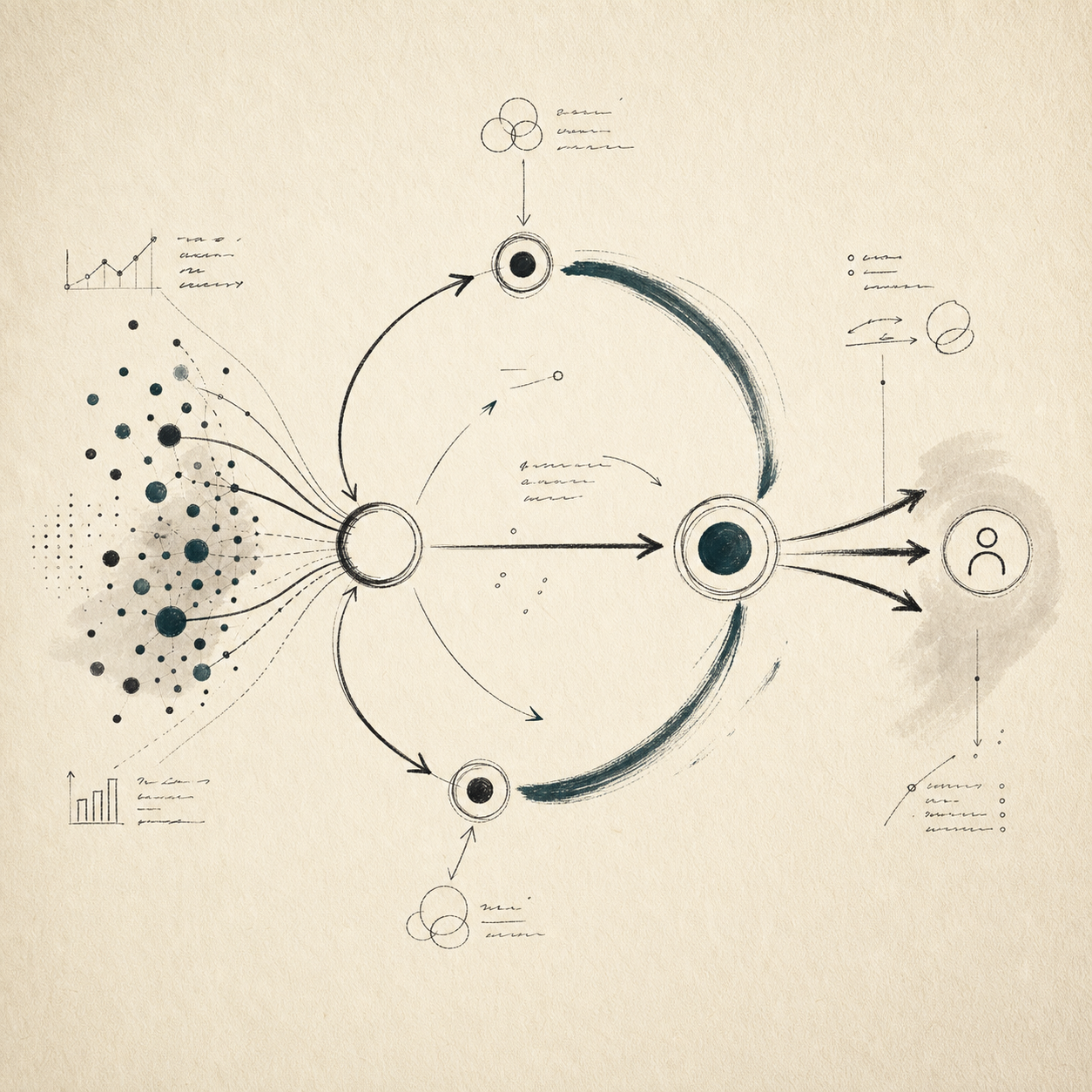
Customer data is everywhere — dashboards, surveys, journey maps, NPS scores. What's rare is the translation: turning all of it into a decision a leadership team will commit to and fund. Insight that doesn't change what a company does isn't strategy. It's just research.
That gap is where I work. I diagnose where the customer experience is actually breaking, build the case in language each function can act on, and drive the change through to a measurable outcome.
And as AI accelerates how fast companies can generate insight, that gap only widens — because understanding why customers behave the way they do is still a human job.
Client names withheld for confidentiality. The outcomes are audited.
At a major card issuer's retail-services arm, I owned customer journey strategy across the co-branded card portfolios. The portfolio I was brought in for — a $1.5B acquisition with roughly 1M customers migrating from a competitor issuer — was my first major conversion.
Right before launch, journey mapping surfaced a problem no one had spotted: customers would receive cards that didn't work for weeks, with no explanation. We fixed it cross-functionally, avoided about $1.3M in service costs, and the practice became the standard for the next conversion.
I led a global technology company's medium-business buyer-profile program — a ten-country research effort to define who the medium-business buyer was and how sales should engage them.
I aligned a roughly 30-person cross-functional coalition and turned dense technical research into insight every function could act on. The pilot drove about $10M in attributed sales pipeline and $1M in attributed revenue over six months — and a second region asked to be included next.
I relaunched a global technology company's North America esports program from the ground up — building the intake-to-delivery process and working with our team lead to secure sponsor funding when the company itself committed zero.
It grew to 59 events reaching more than 57,000 participants, and drove $152M in attributed client pipeline across the products those events influenced.
A five-step method I've run end to end across financial services and enterprise tech. Every step anchors back to what the customer actually needs — that's the through-line.
Map the broken state with the people actually in it — not from a desk.
Bring customers and cross-functional teams into the same room to design the fix.
Turn raw, technical, or siloed input into something every function can act on.
Move it to execution and scale through a real pilot or relaunch.
Build in measurement so it keeps improving after I've moved on.
Insight only becomes a decision when the right people build it together. These are some of the methods I use to make that happen.
Structured co-creation sessions that move a cross-functional group from empathy to a tested prototype — pushing past the obvious answer to one the group commits to and pilots.
One-on-one conversations that go past surface feedback — using curiosity and the "5 Whys" to reach the root causes behind behavior, and the motivations data alone can't show.
Mapping the customer's real experience step by step, with the people in it — surfacing the friction and handoff gaps, and turning scattered signal into a picture leadership can act on.
AI is changing how fast we can synthesize customer data, surface patterns, and translate insight. What it doesn't replace is the room where people align, decide, and commit to change. The companies winning at customer transformation in this era won't be the ones who automate the most — they'll be the ones who use AI to make the room sharper and more focused.
As an advisor to an AI-powered career-acceleration startup, I designed a customer journey mapping approach and a CX health scoring framework — a model that maps early engagement signals to retention indicators, so the team could see which customer behaviors pointed to churn before it happened.
I build small AI tools for my own work — a research synthesizer that turns 10-Ks and earnings calls into a one-page brief, a networking-prep system, and a self-coaching loop. The leverage isn't the AI itself; it's knowing what to ask and what to do with the answer.
These are forward-looking — applications I'd build into the role, not products I've shipped. Each one takes a step of my method and asks where AI makes it faster and sharper, while the decision stays human.
Support tickets, call transcripts, survey verbatims, and reviews usually sit in separate systems, and reading them by hand is what makes diagnosis take a quarter. AI can synthesize all of it into a ranked map of where the experience is breaking and how often.
That turns the slowest part of a transformation into a starting point a team can react to in the first week.
Buyer research usually dies as a slide deck nobody opens. AI lets that research live as a model a salesperson can query in plain language — "how does this buyer evaluate us, and what objection comes first?" — and get an answer grounded in the real study.
The insight stops being a document and becomes something the front line uses in the moment.
Most customer health scores are a quarterly look backward. AI can read engagement signals continuously and map them to retention and expansion indicators — so a weakening account shows up as an early warning, not a renewal-quarter surprise.
That's the difference between measuring what happened and changing what happens next.
I'm exploring Senior Manager and Director roles in Customer Strategy & Transformation across tech, fintech, and payments — and open to advisory and fractional engagements alongside. If that sounds like a fit for your team, or you know where it might be, I'd love to hear from you.